

he advertising world is entering a new era — one where AI-powered creatives are no longer a “nice addition” but the core of modern marketing. In 2026, brands, designers, and marketers are shifting to fully automated creative pipelines powered by generative AI. These tools not only speed up production but deliver personalized, data-driven, high-performing ads at a scale that was impossible just a few years ago.
You May Also Lkie:
- 10 Figma tricks I wish I had known earlier
- Who Owns AI-Generated Creativity? Inside the Growing Copyright Debate
- Top AI Photo Editing Tools Designers Can’t Live Without
In this article, we’ll explore how AI reshapes creative advertising in 2026 — from intelligent ad variations to hyper-personalization, real-time optimization, and multimodal content generation.
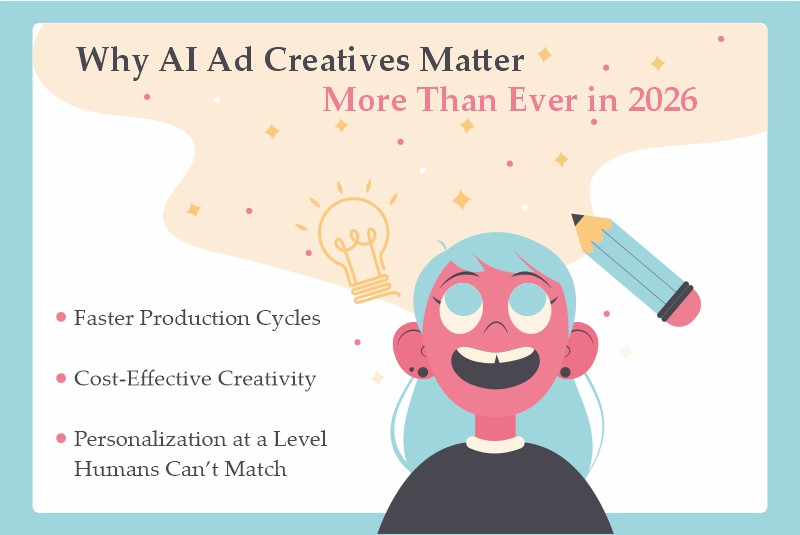
Why AI Ad Creatives Matter More Than Ever in 2026
The digital landscape moves faster every year — more creators, more ads, more competition. Traditional production workflows are simply too slow and too expensive to keep up. That’s where AI-powered ad creatives come in.
1. Faster Production Cycles
In 2026, AI tools can generate entire ad packages in minutes — banners, short videos, product shots, variations for different audiences, and even scripts.
You can produce in one hour what used to take entire creative teams a week.
2. Cost-Effective Creativity
Brands now rely on AI to scale their campaigns without hiring dozens of designers or renting studios for shoots. AI models can:
generate product renders
simulate environments
create endless variations
adapt visuals to different regions
Lower cost → more experimentation → better results.
3. Personalization at a Level Humans Can’t Match
AI analyzes behavior, interests, trends, and real-time performance data.
It then generates personalized creatives automatically — changing colors, headlines, background settings, or even video storylines depending on the viewer.
This level of personalization increases:
CTR
engagement
conversions
brand loyalty
Top AI Creative Trends in Advertising for 2026
Trend 1 — AI-Generated Video Ads Are Becoming the Default
By 2026, AI tools like text-to-video and image-to-video engines create:
product demos
promo animations
TikTok-style short ads
cinematic commercial edits
All without cameras, actors, or complex editing.
A designer simply writes:
“15-second ad, energetic mood, showcasing eco-friendly packaging.”
… and AI produces multiple versions instantly.
Trend 2 — Hyper-Personalized Ad Variations at Scale
AI generates thousands of micro-creatives customized for:
age
location
interests
online behavior
platform (TikTok, Meta, Google, YouTube, Pinterest)
No more one-size-fits-all banners.
2026 ads feel personal — almost too personal.
Trend 3 — Multimodal AI Models Combine Text, Images, Audio, and Video
Creative teams now work with single multimodal models, capable of:
writing ad copy
designing visuals
generating voiceovers
editing video
analyzing performance
even suggesting improvements
This eliminates the need to split work across multiple tools.
Trend 4 — Intelligent Optimization With Real-Time Feedback
AI no longer just creates ads — it studies their performance and produces updated versions automatically.
For example:
Low CTR? AI changes the headline.
Low engagement? AI updates visuals.
Too slow video? AI re-edits pacing and scenes.
This creates a continuous cycle of creative improvement — 24/7.
Trend 5 — Ethical & Transparent AI Advertising
As AI use grows, regulations require brands to indicate when ads include:
AI-generated actors
synthetic voices
AI-manipulated environments
Consumers appreciate transparency, and brands that embrace it gain trust.
What AI-Powered Ad Creation Looks Like in Practice (2026 Workflow)
Here’s a realistic ad workflow designers use today:
Step 1 — Write a Creative Brief (Human + AI)
You describe the concept, target audience, tone, goals.
Step 2 — AI Generates Visuals & Videos
The model produces dozens of ad versions — static, motion, and long/short formats.
Step 3 — AI Writes Variations of Copy
Headlines, CTAs, and descriptions tailored for different audiences.
Step 4 — AI Tests the Creatives
Predicts performance, ranks variations, and highlights which are likely to succeed.
Step 5 — AI Optimizes Campaigns in Real Time
It continually updates ads based on performance data.
Step 6 — Designers Add Final Touches
Human creativity + AI automation = the strongest combination.
Best AI Tools for Ad Creatives in 2026